Slaughterhouse Falls: Everything You Need to Know Before You Raft It
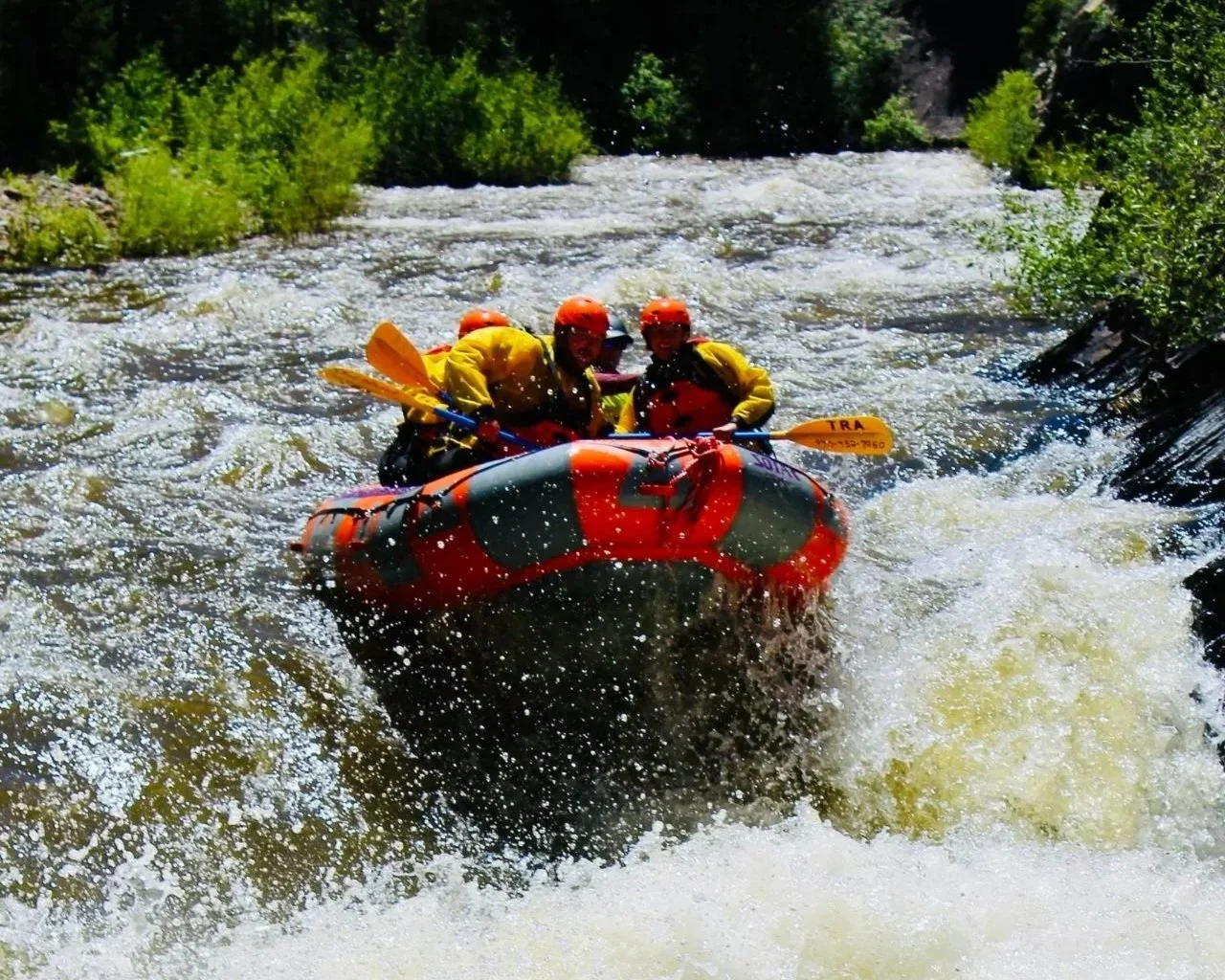
hris Edmonds has run the Slaughterhouse section of the Roaring Fork more times than he can count. He is a Class V guide and ACA-certified Swiftwater Rescue Instructor with commercial experience on rivers across Colorado and West Virginia. When asked to describe his favorite section of the Roaring Fork, he doesn't hesitate: Slaughterhouse.
'It's a very committing run,' Chris says. 'The first rapid starts around a minute into the trip. There's no easing in.'
Here is the complete guide to the Slaughterhouse section -- rapid by rapid, flow level by flow level -- so you know exactly what you're getting into.
What Makes Slaughterhouse Class IV?
The International Scale of River Difficulty classifies rivers from Class I (flat water) to Class VI (unrunnable). Class IV is defined as powerful, predictable whitewater requiring precise maneuvering, with turbulent water and drops that require scouting. Slaughterhouse earns its Class IV rating through gradient, hydraulic power, and the sustained nature of the challenge -- this is not a series of rapids separated by long calm stretches. It is a continuous run that demands engagement from put-in to take-out.
The Rapids: Entrance Exam to Hawaii Five-O
The Slaughterhouse section features many named rapids. Here is what to expect at some of the main rapids:
1. Entrance Exam
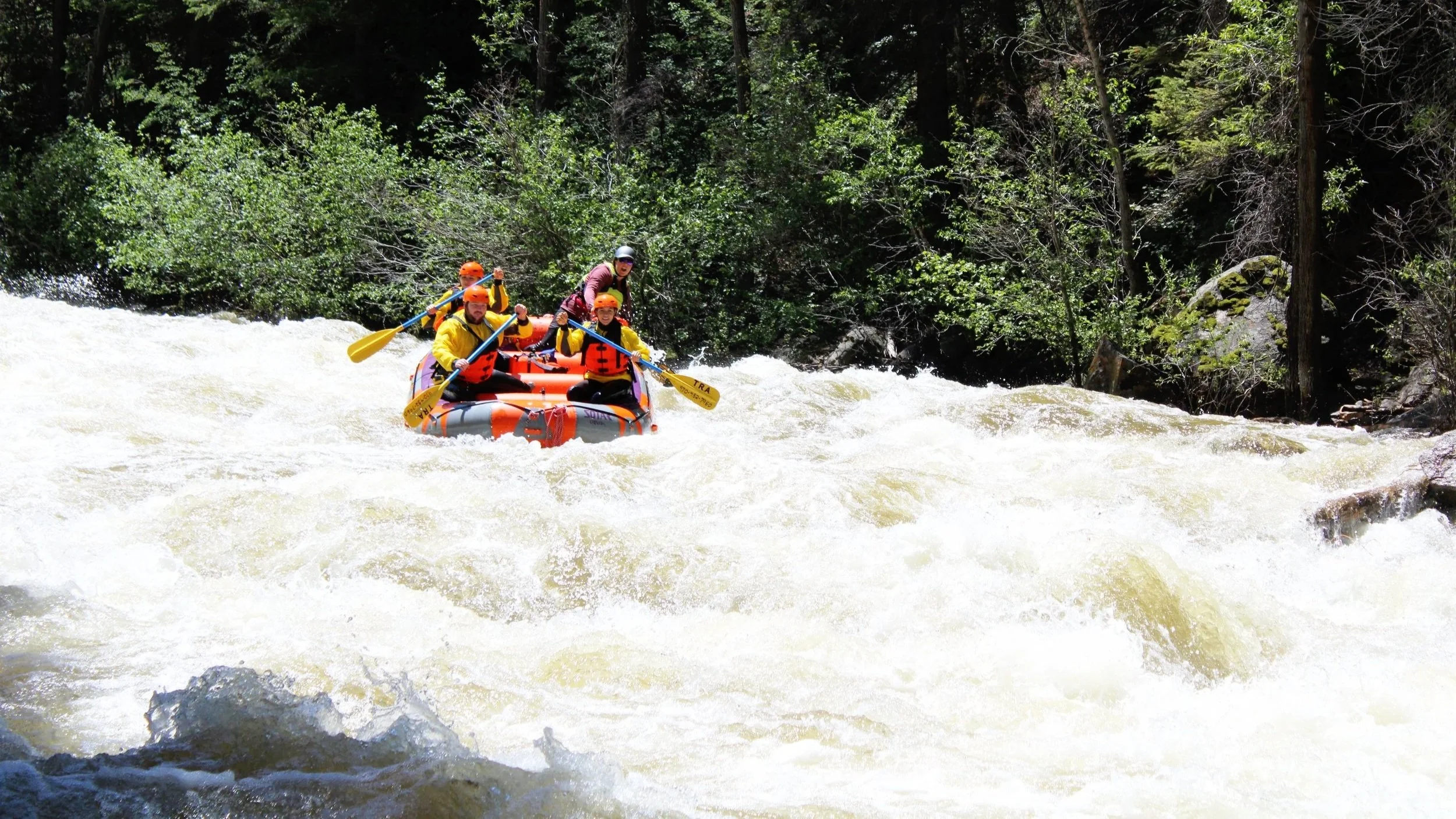
True to its name, Entrance Exam sets the tone within the first minute on the water. It's a strong Class III+ that shows guides how the day's conditions are behaving and gives guests their first hit of genuine whitewater. Most people come through grinning. A few come through wide-eyed. Both are fine.
2. Pinball
Pinball is exactly what it sounds like -- a series of features that push the raft through a technical sequence requiring precise positioning. At lower flows it demands careful line selection through rock features. At higher flows the hydraulics open up and the raft moves through on power rather than precision. Guides read this one differently depending on the day.
3. Slaughterhouse Falls
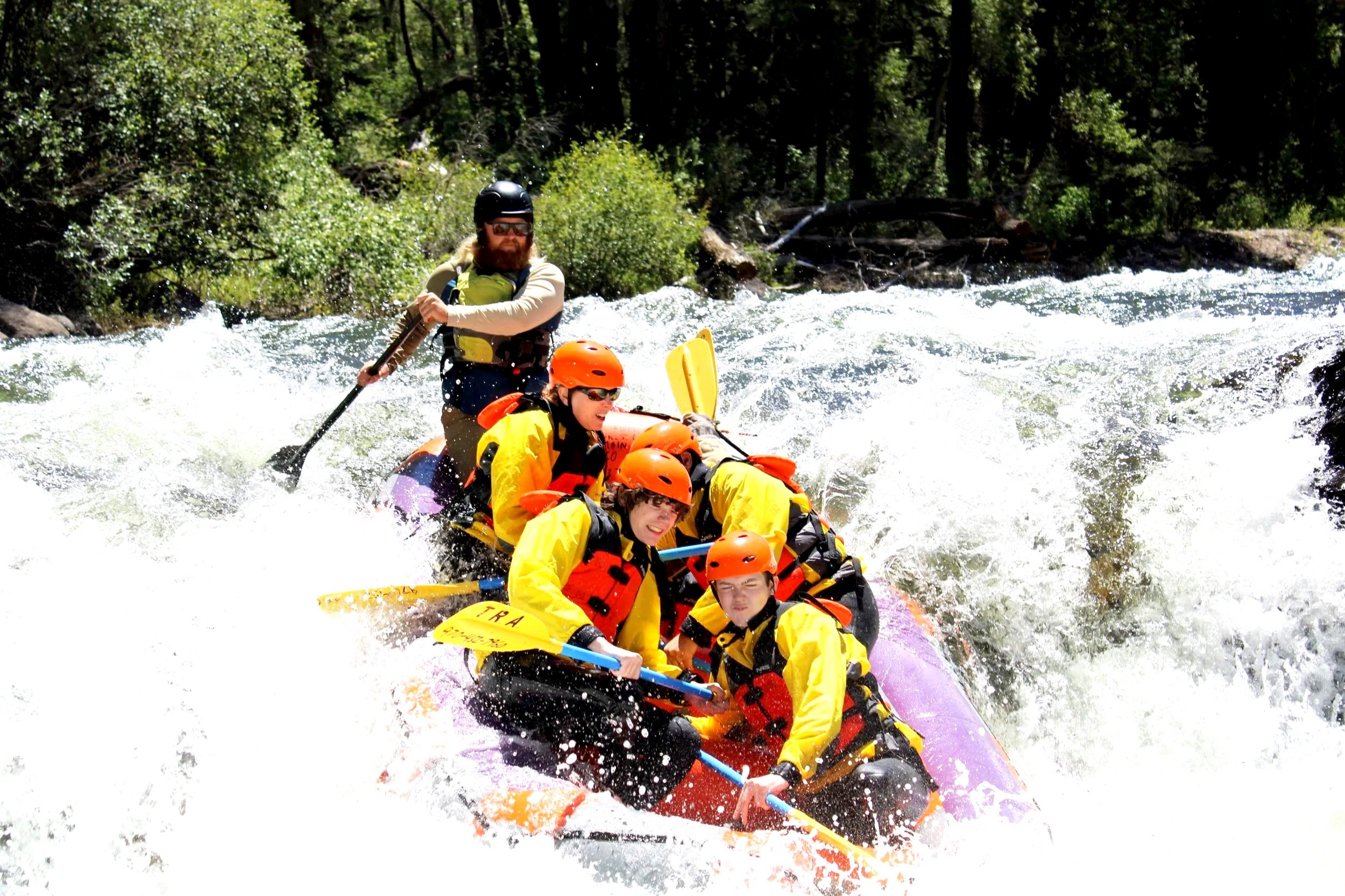
The namesake of the section and its defining feature -- a significant ledge drop that forms the technical crux of the run. The approach line matters. Guides assess conditions before committing. The drop itself is fast, loud, and over in seconds. The adrenaline lasts considerably longer. This is the rapid most guests photograph in their memory even if they didn't have a camera.
4. PIA
A technically demanding rapid with features that shift significantly across flow levels. At moderate flows it requires disciplined paddling and precise positioning. At high water it becomes a powerful, momentum-driven run. PIA has a way of resetting the group's energy mid-trip -- just when people think they've figured out the rhythm, the river introduces a new challenge.
5. Hells Half Mile
The longest sustained rapid on the section -- a continuous stretch of Class IV whitewater that keeps guests working for an extended period. Hells Half Mile is where conditioning matters. Guides brief paddlers specifically on this one because sustained paddling in turbulent water is different from a single-drop rapid. It is also, for many guests, the highlight of the entire trip.
6. Sunshine
A powerful Class III-IV that follows Hells Half Mile and arrives before most guests have fully recovered from it. The name is somewhat ironic -- Sunshine has teeth. It serves as both a challenge and a signal that the most intense section of the run is behind the group.
7. Hawaii Five-O
The final significant rapid on the Slaughterhouse section -- a wave train that sends the raft through a series of standing waves in a way that feels celebratory after the technical demands of the upper section. Most guests come through Hawaii Five-O with their arms in the air. It's a fitting finish.
How Flow Level Changes Everything
The Roaring Fork is a free-flowing snowmelt river with no dam regulation -- which means flow conditions vary dramatically across the season and even across weeks. Here's how Chris and Kate describe each flow window on the Slaughterhouse section:
450-800 CFS: A technical, rock-dodging run. Lines are specific. Guides make precise decisions at each rapid. This is a cerebral Class IV that rewards careful paddling.
800-1,600 CFS: Technical with fun wave features. The hydraulics are well-defined, the lines are readable, and the run has a momentum and power that most guests find ideal. This is the sweet spot for the Slaughterhouse experience.
1,600-2,200 CFS: High-water conditions. The river becomes faster, the features push into Class IV+ territory, and the run requires experienced guides making real-time decisions. This is when the Roaring Fork shows its full power.
2,200+ CFS: This range transitions into Class V and is not run commercially by Thunder River Adventures. Chris and Kate make this call based on conditions, not calendars. Guest safety is always the deciding factor.
Guide Credential: Chris Edmonds is an ACA-certified Swiftwater Rescue Instructor -- meaning he not only holds the highest levels of rescue certification but is qualified to teach and certify other guides. Kate Edmonds is a Class V guide and licensed Wilderness EMT. Their credentials are not marketing -- they are qualifications earned on rivers.
Who Should Run Slaughterhouse?
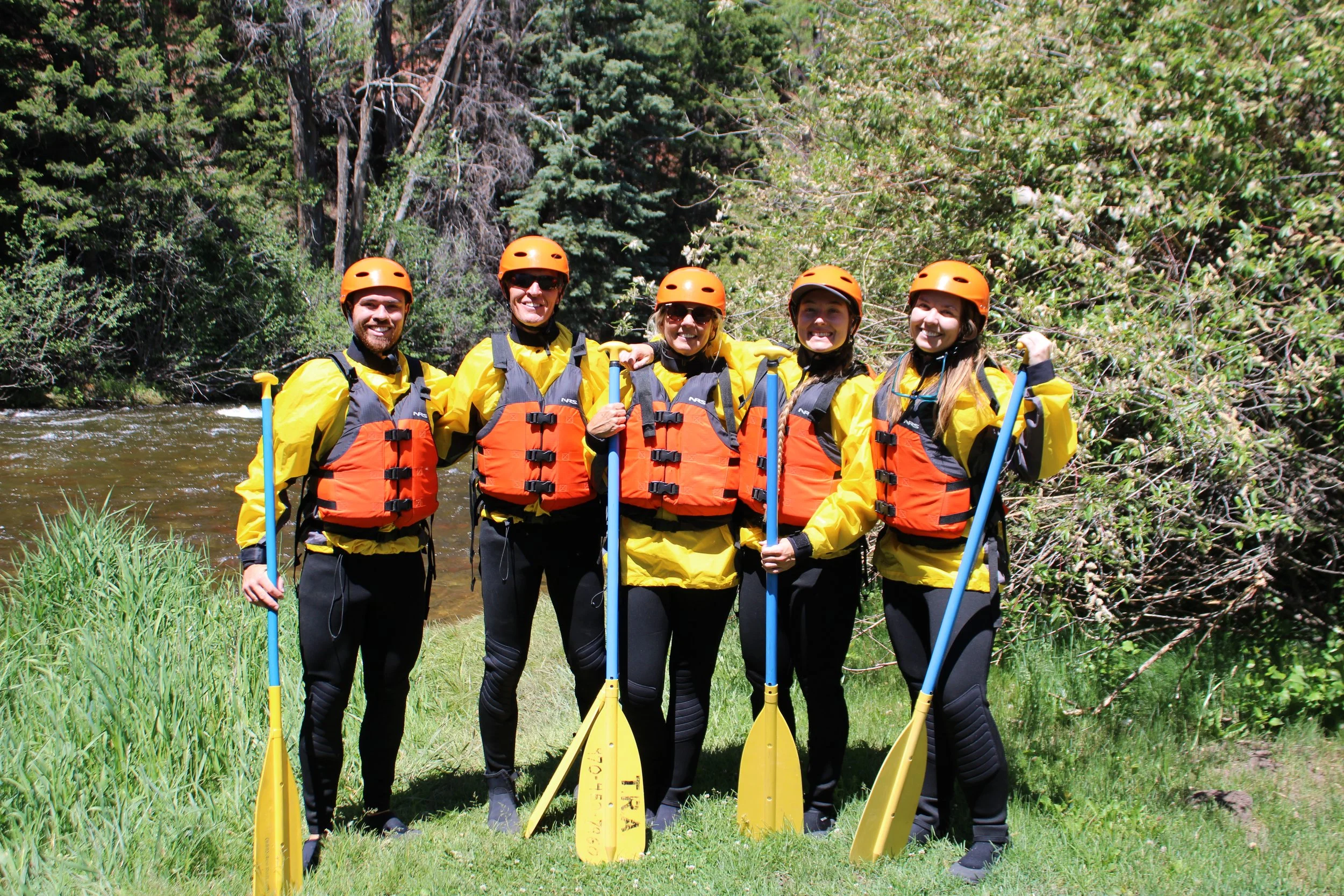
Guests in reasonable physical condition -- sustained paddling and core strength matter
Guests comfortable with the possibility of getting wet -- guides work to prevent swims, but rivers are rivers
Minimum age 12 and minimum weight approximately 80 lbs for PFD fit -- confirm at booking
Guests willing to follow paddle commands quickly -- on Class IV, timing is everything
If you are unsure whether Slaughterhouse is right for you, our Canyon Cruise is an excellent introduction to the Roaring Fork at Class II-III. Many guests do the Canyon Cruise one trip and come back for Slaughterhouse the next.
What to Bring
Swimwear or athletic clothes -- you will get wet
Secure footwear -- sandals with heel straps or water shoes; flip flops will be lost
Sunscreen applied before arrival -- canyon shade is limited
A change of clothes for the car -- always necessary
Leave valuables behind -- waterproof cases recommended if you want photos
Ready to Experience It for Yourself?
The most common thing guests say after Slaughterhouse: 'When is the next rapid?' Book your trip at thunderriveradventures.com